The Paper Timesheet Problem
Your crew fills out paper timesheets at the end of the week. They round up. They estimate. They forget which day they were at which job. By the time payroll processes those sheets, you are paying for hours that may or may not have been worked, allocated to jobs that may or may not be accurate.
This is not a trust problem — it is a memory problem. Nobody can accurately remember what they did last Tuesday at 2pm. Paper timesheets are a system designed to fail, and the cost of that failure adds up: overpayment, inaccurate job costing, and no visibility into where your labor dollars actually go.
What Good Time Tracking Looks Like
Digital time tracking on mobile devices solves the memory problem by recording time as it happens. Your crew clocks in when they arrive at a job site and clocks out when they leave. The system captures the time, the date, and the job automatically. No guesswork, no rounding, no end-of-week estimation.
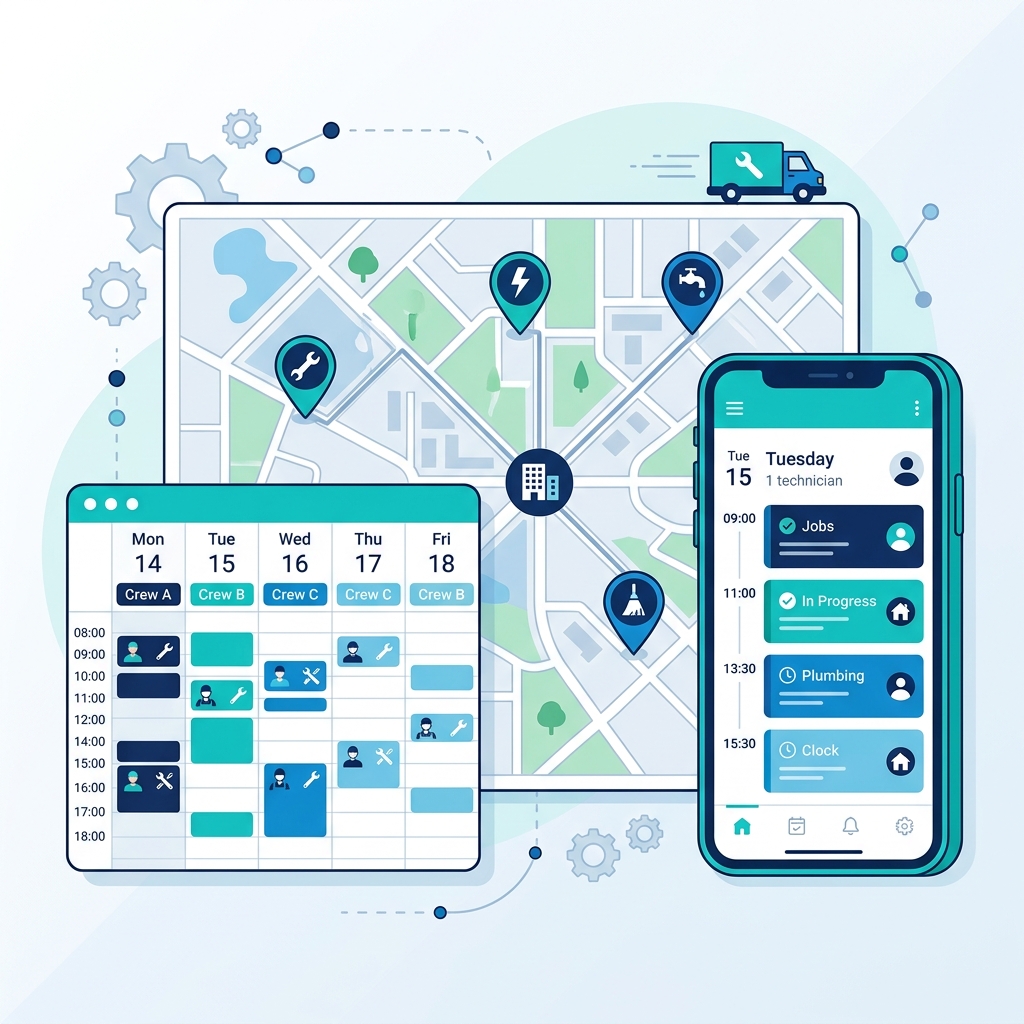
AutEvo AI's time tracking is built into the same app your team uses for their schedule and job details. There is no separate app to download or remember. They open their daily schedule, tap the job, and hit "Clock In." When they finish, they hit "Clock Out." The hours are logged to the specific job, ready for payroll and job costing.
The Job Costing Connection
Time tracking in isolation is useful for payroll. Time tracking connected to jobs is transformational for your business. When every hour is logged against a specific job, you can see exactly how much labor went into each project — and compare it to what you quoted.
That $8,000 bathroom remodel? Your quote assumed 40 hours of labor. Time tracking shows it actually took 52. That is a 30% overrun you would never have caught without the data. Over dozens of jobs, those overruns compound into serious margin erosion.
AutEvo AI's reporting shows you labor cost per job, labor cost per phase, and crew productivity comparisons. You can identify which types of jobs are profitable and which ones are eating your margins. You can adjust your quoting for future jobs based on actual data instead of gut feel.
Eliminating Buddy Punching and Time Theft
Let us address the elephant in the room. Time theft — whether intentional or accidental — costs businesses an estimated 5-10% of gross payroll according to the American Payroll Association. That includes buddy punching (one employee clocking in for another), extended breaks, and early departures recorded as full days.
Mobile time tracking with GPS verification makes this nearly impossible. When an employee clocks in, the system records their location. You can see that they were at the job site, not at a coffee shop three miles away. This is not about being a micromanager — it is about having accurate data for accurate business decisions.
Payroll Integration
The final piece is getting time data into payroll without re-entering it. AutEvo AI connects time tracking directly to payroll processing. Hours are categorized by regular time, overtime, and job allocation. When payroll day comes, the data is already there — reviewed, approved, and ready to process. No spreadsheet exports, no manual calculations, no errors.
The ROI Is Immediate
Most businesses that switch from paper to digital time tracking see savings within the first pay period. The combination of accurate hours (no more rounding up), job costing visibility (no more hidden overruns), and payroll efficiency (no more manual data entry) typically saves 3-7% of total labor costs. For a business spending $300,000 per year on labor, that is $9,000-$21,000 back in your pocket. The tool pays for itself before the first month is over.