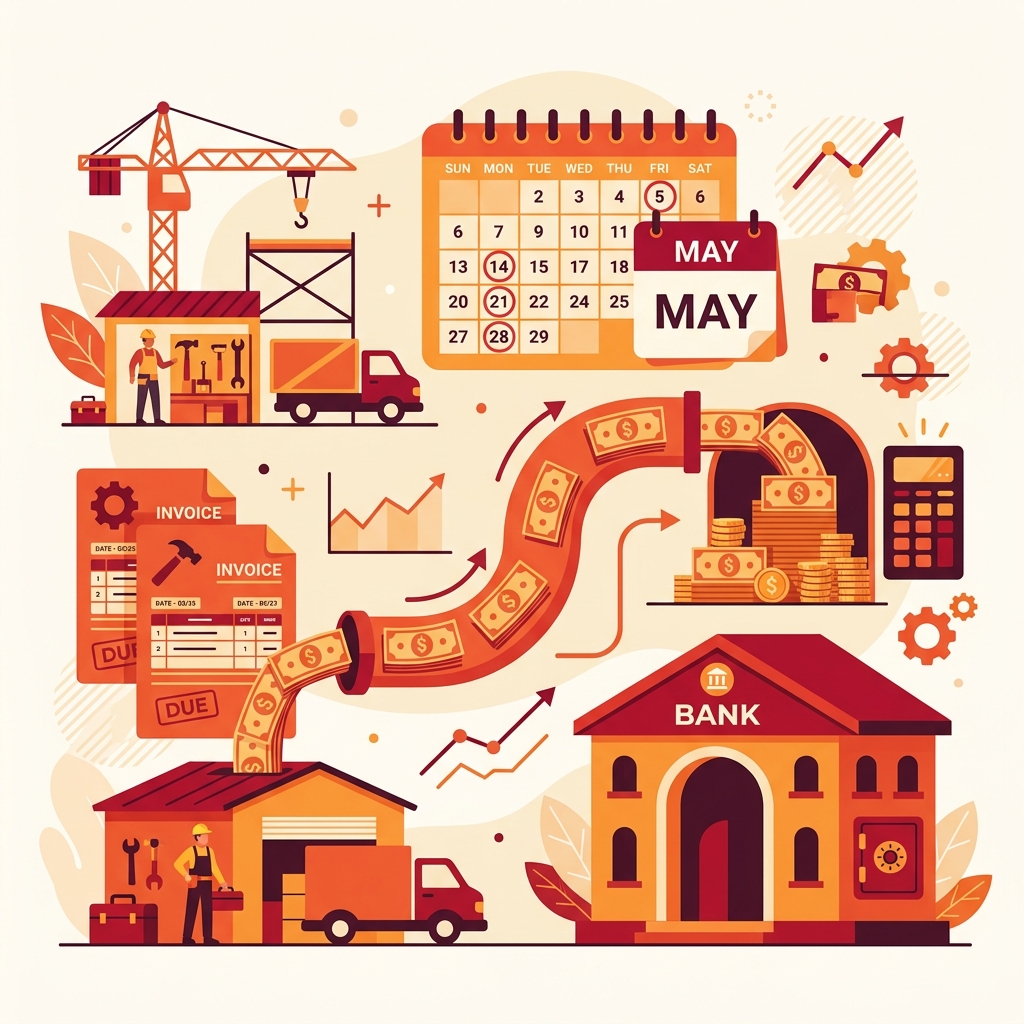
The Uncomfortable Truth About Late Payments
You finished the job two weeks ago. The customer was thrilled. They shook your hand, said "great work," and you drove away feeling good. Then the invoice went out. And silence. A week passes. Then two. You send a follow-up. Nothing. Now it is awkward — you do not want to damage the relationship, but you also need to make payroll on Friday.
This cycle repeats across the service industry every single day. According to industry surveys, the average service business waits 45-60 days to get paid after completing work. For small operators, that gap between finishing a job and receiving payment is the single biggest threat to survival.
Why Customers Pay Late (It Is Not Always Malice)
Before assuming the worst, understand why most late payments happen:
- The invoice got buried. You sent a PDF via email. It landed in a promotional tab or got lost in a thread. The customer genuinely forgot.
- Paying is inconvenient. Your invoice says "mail a check to..." or "call us with your credit card number." In 2026, that is friction most customers will not fight through.
- There is no urgency. Your invoice has no due date, no late fee policy, and no automated reminders. The customer assumes they can pay whenever.
- Disputes go unresolved. The customer has a question about a line item but does not know how to reach you easily. So they just do not pay.
Strategy 1: Collect Deposits Before You Start
The simplest way to improve cash flow is to not start work without money in hand. For any job over $1,000, a 25-50% deposit is standard and expected. Most customers are happy to pay upfront — it signals commitment on both sides.
AutEvo AI lets you add deposit requirements to quotes. When a customer approves the quote, they pay the deposit right then, via credit card or ACH. The money hits your account before your crew arrives. No awkward conversations. No "I'll send it later." The system handles it.
Strategy 2: Make Paying Effortless
Every step between "customer sees invoice" and "money in your account" is a chance for them to get distracted. The solution is radical simplicity: one link, one click, done.
AutEvo AI invoices include a direct payment link. The customer opens the email, clicks "Pay Now," enters their card or bank info, and the payment processes instantly. They can also pay through their customer portal. The invoice, payment link, and receipt are all in one place.
Strategy 3: Automate Your Reminders
Nobody likes chasing payments. It feels desperate and damages relationships. But not following up is worse — it sends the message that you do not care about getting paid, which means customers will not prioritize you.
Set up automated payment reminders instead. AutEvo AI can send a reminder 3 days before the due date, on the due date, and 7 days after. The tone is professional and friendly — not aggressive. If you want, you can add a late fee policy that kicks in automatically. The system does the uncomfortable work so you do not have to.
Strategy 4: Progress Billing for Large Jobs
For projects that span weeks or months, waiting until the end to invoice is a recipe for cash flow disaster. Progress billing breaks the total into milestones: 25% at materials delivery, 50% at rough-in, 100% at completion.
AutEvo AI supports progress invoicing tied to job phases. As each phase completes, the corresponding invoice is generated and sent automatically. Your cash flow stays steady throughout the project, not just at the end.
The Compound Effect
No single tactic here is revolutionary. But combined — deposits, easy payments, automated reminders, and progress billing — they transform your cash flow. Businesses that implement all four typically reduce their average days-to-payment from 45+ days down to under 14. That is the difference between scrambling to cover payroll and having a healthy cash reserve. The tools exist. The question is whether you will use them.